EPDM Compatibility Guide
EPDM performs well with water, steam, hot water, many caustic solutions, glycol, and some oxidizing chemical services. It is generally not a good choice for petroleum oils, fuels, hydrocarbons, and many solvent applications.
30+ years spec experience. Send James the process data and get a real answer — not a catalog page.
Request a Spec Review →Valve Material Resources Built Around the Same Spec Path
Use this EPDM guide as the pillar page, then move into the deeper pages based on the exact valve material, chemical service, or vendor platform you're specifying.


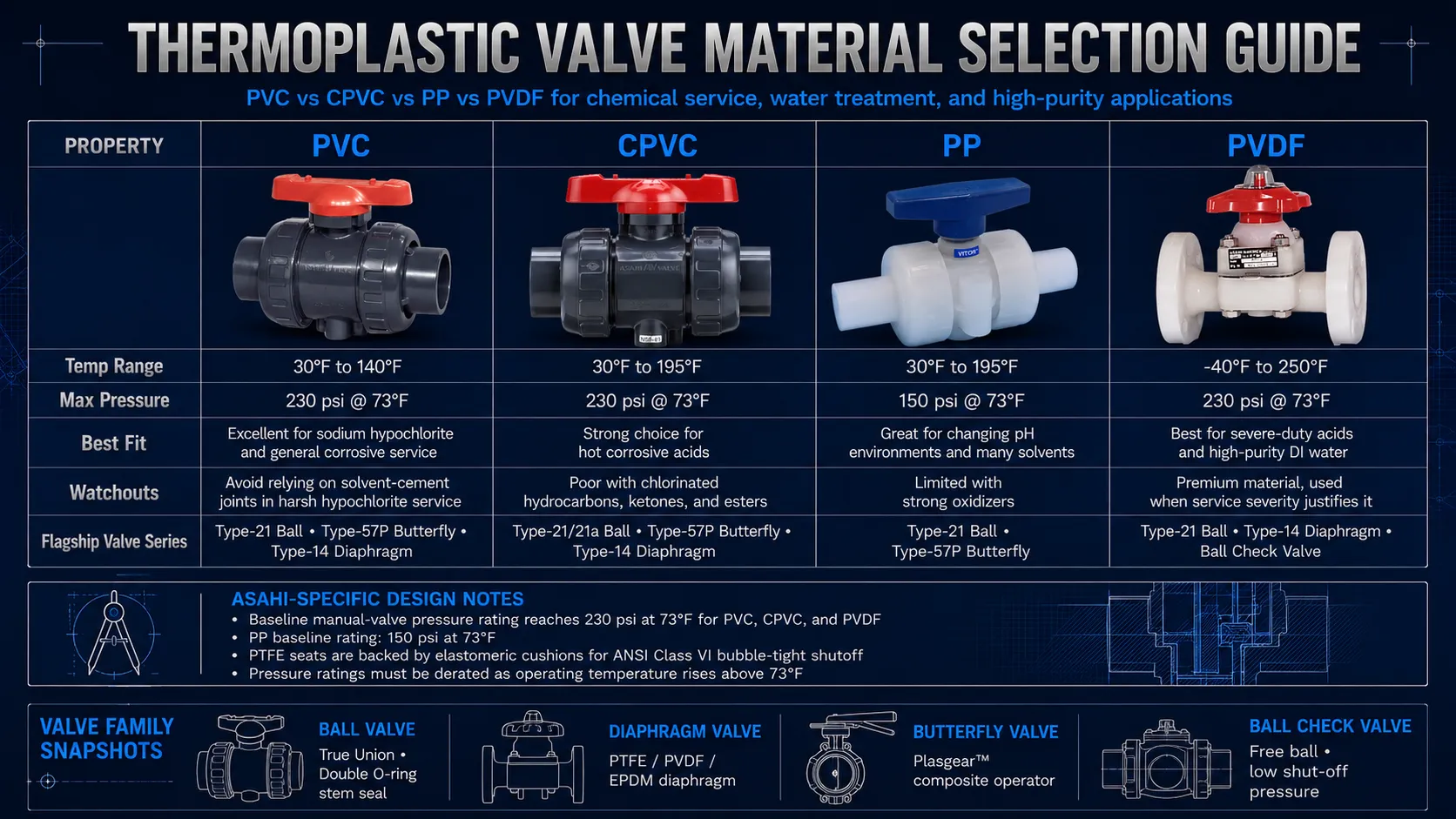
EPDM is either correctly specified or incorrectly specified — this distinction determines whether a valve functions reliably or fails prematurely.
Water and Wastewater Service
EPDM is commonly used in water systems, though temperature, disinfectants, and additives require evaluation. Systems using chloramines or high-concentration disinfection need closer examination of seat and seal specifications.
Sodium Hydroxide and Caustic Soda
EPDM is often considered for caustic service, but concentration and temperature must be verified before specifying materials. Low-concentration caustic at ambient conditions differs significantly from hot, concentrated sodium hydroxide in continuous processes.
Glycol and Cleaning Solutions
EPDM may work with glycol and water-based cleaners, but additives can alter compatibility profiles. The exact fluid blend must be verified rather than relying on general chemical families.
Petroleum Oils, Fuels, and Hydrocarbons
EPDM performs poorly in these applications and can swell, soften, crack, lose elasticity, or lose sealing force. In valves, this typically manifests as increased operating torque, poor shutoff, internal leakage, or recurring seal failure.
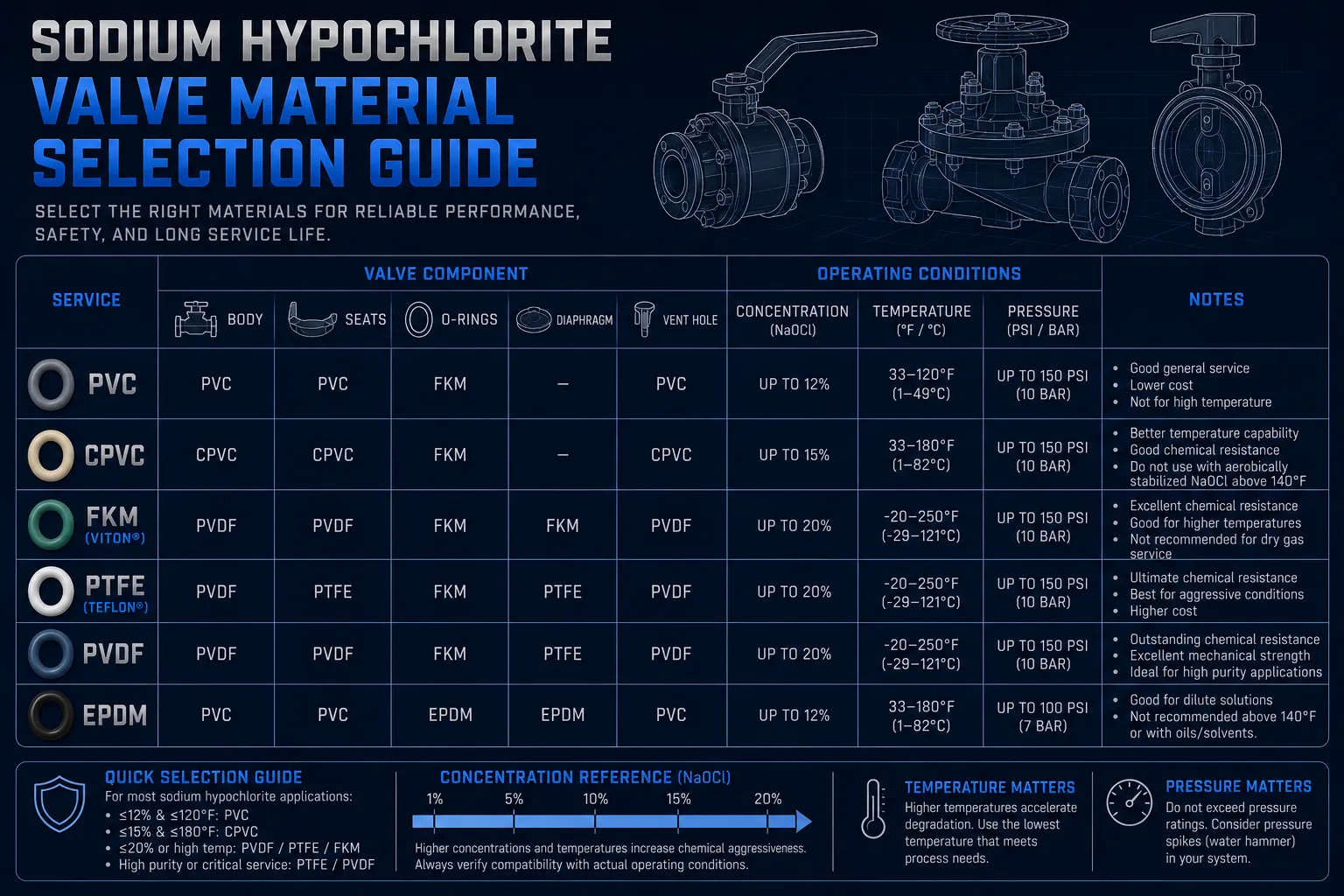
Sodium Hypochlorite Service
This application requires careful verification rather than generic compatibility charts. Concentration, temperature, off-gassing, body material, seat material, seal material, diaphragm construction, and venting all factor into compatibility determinations.
| Material | Best For | Limitations |
|---|---|---|
| EPDM | Water, steam, caustic, glycol | Poor performance with oils and fuels |
| FKM (Viton) | Hydrocarbons, oils, fuels, solvents | Weak in steam and caustics |
| PTFE | Broad chemical resistance | Less flexible; may require backing |
| Buna-N/NBR | Oils and fuels | Not universal for all chemicals |
Before Specifying EPDM Valves, Confirm:
- Exact chemical name and concentration
- Operating temperature (minimum, maximum, continuous)
- Pressure specifications
- Valve type and body material
- Seat, seal, and O-ring materials
- Diaphragm construction
- Off-gassing or trapped pressure considerations
- Manufacturer configuration for specific service
Frequently Asked Questions
What chemicals is EPDM compatible with?
EPDM is commonly compatible with water, steam, many aqueous salts, caustic solutions, and some dilute acids. It should still be checked by concentration, temperature, pressure, and application.
Is EPDM compatible with sodium hypochlorite?
EPDM can be compatible in some sodium hypochlorite services, but it is not an automatic approval. Concentration, temperature, off-gassing, and valve design matter — verify against the full spec, not a generic chart.
Is EPDM compatible with caustic soda?
EPDM is often a strong choice for sodium hydroxide and caustic soda service, especially in aqueous solutions, but high temperature and concentration still need to be checked.
Is EPDM compatible with sulfuric acid?
EPDM may be suitable for dilute sulfuric acid, but concentrated sulfuric acid is not a good EPDM application.
Is EPDM compatible with hydrocarbons or oil?
No, EPDM is generally not the right elastomer for hydrocarbons, fuels, petroleum oils, or many solvents — it can swell and lose sealing integrity. FKM or Buna-N/NBR is typically the better choice.
Is EPDM the same as FKM or Viton?
No. EPDM and FKM are different elastomers with different compatibility ranges. EPDM is often stronger in water, steam, and caustic; FKM is often used in oils, fuels, hydrocarbons, and many solvents. They are not interchangeable.
Is EPDM the same as PTFE?
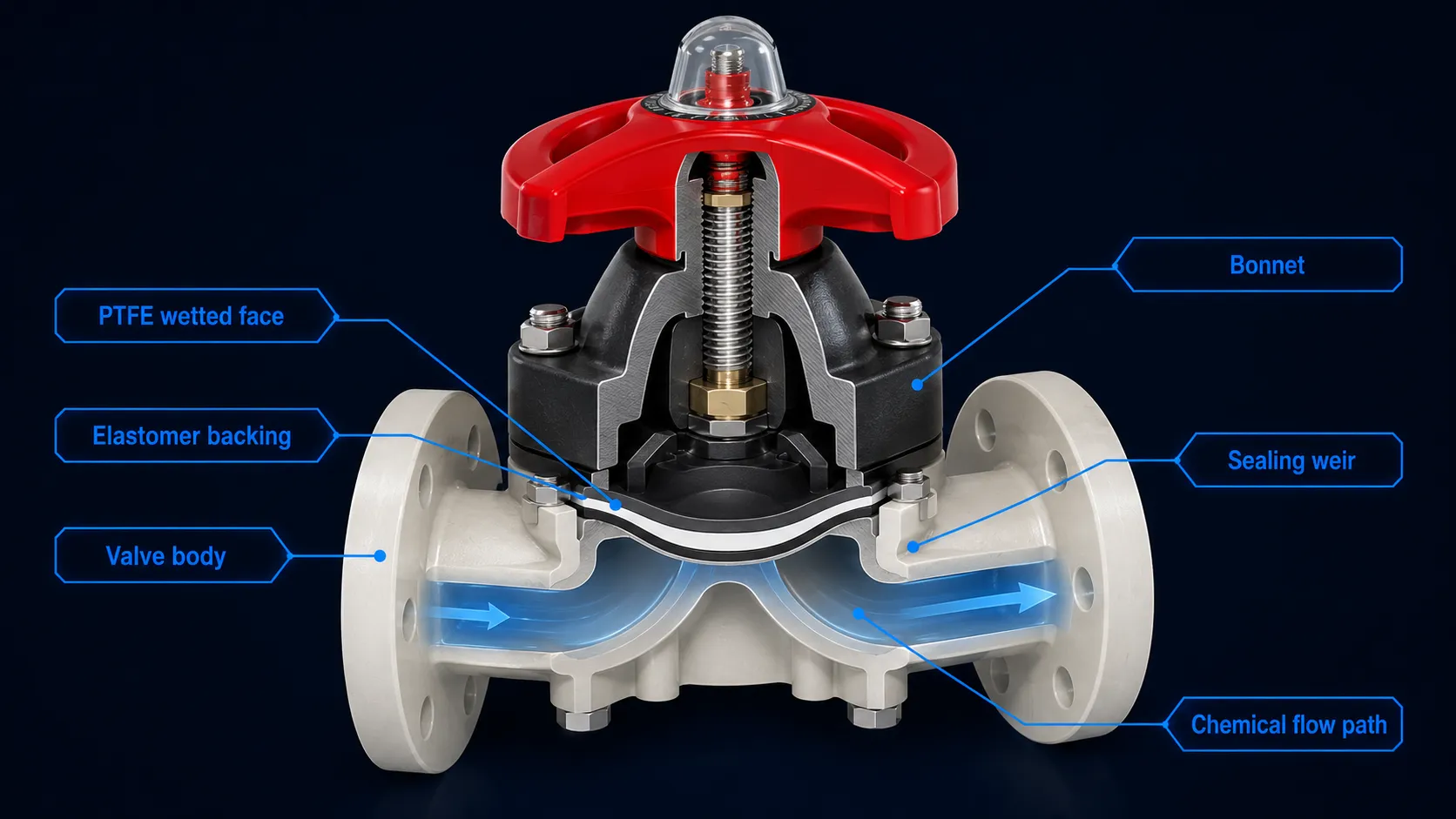
No. EPDM is a flexible rubber elastomer; PTFE is a fluoropolymer with broader chemical resistance but different mechanical behavior. Some diaphragm designs use PTFE as the wetted layer with EPDM as a backing layer — different roles in the same assembly.
Send the chemical, concentration, temperature, pressure, and valve type
Generic compatibility charts provide initial screening but cannot replace comprehensive valve specifications.
Ready to buy or need a fast answer? Call, text, or email James directly — (559) 395-5500 · [email protected].