Radar Level Monitoring for Bulk Fertilizer Storage
A major California fertilizer distributor faced critical sensor failures in 40-foot bulk storage towers because dense process vapor and foam made ultrasonic level readings unreliable. LibertyCES replaced the failing sensors with 80 GHz radar level monitoring — real-time SCADA tank monitoring, PLC integration, pump interlocks, and inventory visibility in tons.
Solving Ultrasonic Attenuation with Pulse Radar Level Controllers
This case study explains how a California fertilizer distributor replaced unreliable ultrasonic level sensors with 80 GHz radar level controllers on 40-foot bulk storage towers — improving real-time level visibility, reducing manual tank checks, integrating with PLC and SCADA controls, and giving operators better inventory data for bulk material management.

Vulnerable to signal loss from vapor, foam, and dust.
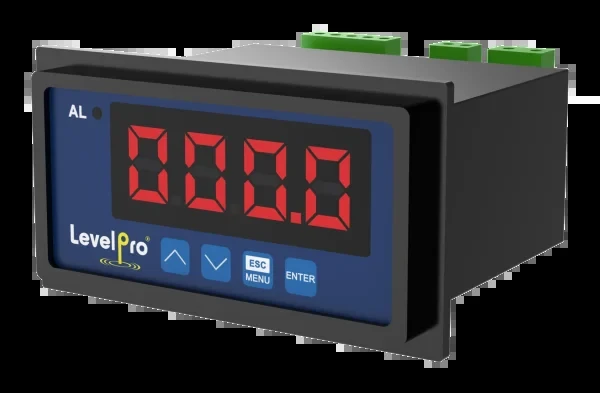
Electromagnetic measurement, unaffected by vapor or foam.
Before: The Ultrasonic Attenuation Problem
- Ultrasonic attenuation from dense chemical vapors caused sensor drop-outs and false readings.
- Manual tank climbing for visual checks created safety risk and production delays.
- Inventory variance created an estimated ~$50k/year shrinkage exposure based on prior material tracking assumptions.
- No real-time visibility limited operator awareness across multiple storage towers.
- Supply chain disruptions became harder to prevent when storage levels were not reliably visible.
After: Radar + PLC Integration
- 80 GHz radar level sensors were installed to improve reliability in vapor-heavy tower conditions.
- SCADA-compatible monitoring displayed real-time bulk material levels for operators.
- PLC integration supported automated pump interlocks and hi/lo alarm sequences.
- Inventory control improved through better level data, trend visibility, and reorder planning.
- Safer operations reduced dependence on manual climbing and visual tank checks.
"Radar uses electromagnetic energy instead of sound, making it generally far more reliable than ultrasonic in vapor, foam, dust environments."
Ultrasonic sensors giving false readings in vapor, foam, or dust conditions?
Radar Level Monitoring FAQ
Why does ultrasonic level sensing fail in chemical vapor environments?
Dense process vapor and foam can cause ultrasonic attenuation — the sound pulse used for measurement gets absorbed or scattered, causing sensor drop-outs and false readings.
Why use 80 GHz radar level monitoring instead?
80 GHz radar level controllers are less affected by vapor, dust, and foam than ultrasonic sensors, making them more reliable for vapor-heavy bulk storage conditions like fertilizer towers.
What does PLC/SCADA integration add to level monitoring?
PLC integration supports automated pump interlocks and hi/lo alarm sequences, while SCADA-compatible monitoring gives operators real-time visibility and trend data across multiple storage towers.
Dealing with unreliable level sensing in vapor or foam conditions?
Send LibertyCES your tank dimensions, media type, and current sensor setup — we'll help specify the right radar level configuration.